Best Memory Foam Mattress for Overweight Persons & Heavy Couples
Quality sleep is a fundamental aspect of good health. While several factors can lead to poor sleep quality, an uncomfortable mattress is an underlying culprit.
Several individuals have discovered that memory foam mattresses deliver a winning blend of comfort, durability, and support. However, not all memory foam mattresses are designed to support heavy or overweight individuals.
This is why it is never a good idea to simply purchase any memory foam mattress you come across. In this guide, you will discover the best memory foam mattress for overweight person as well as the critical factors to consider when shopping for one.
Please note that in this post when we use the words “overweight” “heavy” or “plus-size” we mean people who weigh more than 230 pounds.
Best Memory Foam Mattress for Overweight Person: Nectar Queen Mattress
Some of the issues that overweight sleepers have to contend with include: mattress sagging, improper or inadequate support, mattress softening and collapse, and heat-trapping.
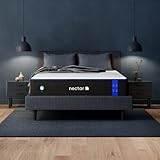
The Nectar Queen Mattress is designed to tackle all of these issues, hence, it is our pick for the best memory foam mattress for overweight persons and heavy couples.
To start with, the memory foam used in making the mattress is infused with gel beads, which enhances the foam’s ability to draw heat away from your body. This helps eliminate the problem of body heat-trapping that memory foam mattresses are notorious for.
Another reason the Nectar Queen Mattress works great for overweight sleepers is its medium-firm feel. Mattresses with medium firmness qualities typically offer a great balance between support and comfort.
This is why many sleep experts recommend it for plus-size sleepers. These mattresses offer pressure relief plus body contouring but your body will not sink too much into the mattress.
The queen-size mattress also has a thickness of 12 inches, meaning that your body weight will have no adverse effect on it whatsoever.
Nectar offers 5 impressive comfort layers. The underside of the mattress has a cover that helps prevent slippage. On top of this cover sits a base layer that provides support.
Next to the base layer is an adaptive and highly responsive layer that delivers much of the support required to prevent that sinking into quicksand feeling.
The next layer is gel memory foam that helps disperse your weight plus body heat all through the mattress. Lastly, there is the highly breathable and plush top layer of cooling Tencel cover.
The manufacturers offer a trial period of 365 days to their customers. So, you can use this period to try out the mattress to ascertain if it promotes good sleep, feels comfortable, and fits your personal preferences.
If the product fails to meet your requirements during this period, you can return it with a full refund, no questions asked. The product also comes with a forever warranty, which is another way the manufacturers show that they are fully committed to their customers.
Nectar employs only Cetipur-US Certified foams meaning that the mattress does not contain ozone depleters.
Specifications
- Weight limit: 600 pounds
- Size: Queen
- Dimension: 80″ x 60″ x 12″ (Length x Width x Thickness)
- Firmness: Medium
- Color: White
- Item weight: 71 pounds
Pros
- Comes with 5 comfort layers
- Highly durable
- Comes with two pillows
- Suitable for all sleeper types
- Perfect firmness
- Very comfortable and supportive
- The Tencel cover offers loads of space for air circulation
Cons
- Poor edge support
Usage Guidelines
The manufacturers recommend that after you unroll the mattress, you should let it sit for a day at room temperature to allow the surface to return to its standard feel.
User Feedback on Nectar Queen Mattress
Positive Remarks
Below are some of the positive reviews from the users of the Nectar Queen Mattress
- Several heavy combination sleepers report sleeping more cozily on the mattress
- Many hot sleepers say the mattress feels cool when they first lay down and stays that way all through the night
- Several previous buyers who are overweight report that they never had that sinking into quicksand experience with this mattress
- Many previous purchasers say they were pleasantly surprised by the 2 standard pillows included in the package
- Nearly all previous buyers like how simple it is to unbox and set up the mattress
- Many shoppers rave that the mattress is very comfortable yet highly supportive, including reviewers who are heavily pregnant
- Several users who suffer from back pain report that they wake up each morning on the mattress pain-free
Negative Remarks
Below are some of the negative comments from the users of the Nectar Queen Mattress
- Some previous purchasers report that the mattress’ top layer sinks in too much
- A few users describe the mattress as extremely soft saying that it did not provide enough support.
- Some shoppers complained that the mattress is somewhat too firm
4 More Top Rated Memory Foam Mattresses for Overweight Persons
1. Live & Sleep Ultra Queen Mattress
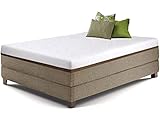
This gel memory foam bed from Live and Sleep comes with 3 foam layers with a total thickness of 12 inches. The top layer is 2.5 inches of first-rate memory foam.
The middle layer is also memory foam but one that has been gel-infused to enhance its cooling properties. The base layer is high-density polyurethane that is 8.5 inches thick.
These layers give the mattress a pleasant medium firmness, which makes it ideal for heavy couples and overweight sleepers.
Many plus-size shoppers describe this bed as having the ideal blend of firmness and plushness. That means the bed is not too dense that it feels like you are sleeping on a bare floor, but not too plush that your body sinks too in making it difficult to escape.
The mattress is CertiPUR-US certified as well as Oeko-tex certified. Thus, aside from giving you cozier night sleeps, the Live and Sleep Ultra Queen mattress contains no chemicals that can harm your health or the environment.
Many users reported that they encountered no smell that many memory foam mattresses give off after it has been unboxed. This is probably due to the green materials used in its manufacture.
The memory foam mattress comes compressed within a box. You just need to unroll it on your bed. You will not have to squeeze it through entryways and staircases.
Live and Sleep backs up their product with a 20-year warranty. There is also a 30-day trial period with a full refund guarantee. Note that it may take 2 to 3 days for this mattress to be fully broken in.
2. Zinus 12 Inch Green Tea Memory Foam Mattress

This Zinus mattress offers a high degree of durability and is well equipped to meet the needs of overweight persons and heavy couples. It features 3 pressure-relieving foams that make the mattress superb for plus-size sleepers.
Three inches of memory foam sits at the top. This is followed by 2 inches of plush, airflow boosting comfort foam. The base layer is 7 inches of robust, high-density foam.
This memory foam mattress will work great for you if you are an average plus-size side sleeper (250 – 300 pounds).
The mattress is offered in various sizes including narrow twin, twin XL, twin, full, queen, short queen, California king, and king. Each of these mattresses can bear a max weight of 500 pounds save for the twin mattress which can bear a max weight of 250 pounds.
Another endearing feature of the Zinus 12-inch memory foam mattress is that it is permeated with a green tea aroma, which many reviewers say they find very refreshing.
The memory foam layer also contains Active Charcoal that soaks up moisture as well as helps draw heat away so you can sleep cool.
The mattress is also Certipur US certified, meaning that you can trust that the mattress will perform well concerning durability and comfort. The bed-in-a-box mattress is easy to maneuver into any bedroom.
And, once you unbox and unroll the mattress, it will spread out to its initial shape within 6 days. The manufacturers offer an anxiety-free 10-year warranty.
3. Lucid 12 Inch Hybrid Mattress

This hybrid memory foam mattress from Lucid is a fantastic choice for plus-size individuals due to its impressive support features. The mattress features several delicately crafted layers that offer distinct benefits.
It has a base layer of 1-inch thick foam. The next layer is 6.5 inches thick and comprises steel coils that are wrapped separately.
These coils play three vital roles. They provide much of the support that makes the bed suitable for overweight persons. They also serve as cooling structures that regulate the temperature of the mattress to keep you cool.
Lastly, they help reduce motion transmission from one section of the mattress to the other. The bed’s memory foam layer is infused with gel for enhanced temperature control.
The uppermost layer is 3.5-inch real latex. The memory foam layer and latex layer work together to deliver conforming comfort plus responsive support.
The material construction of this mattress makes it ideal for those who desire the coziness of memory foam plus the breathable qualities of latex. Another feature worthy of mention is the mattress’ 5-inch supported edges.
With this feature, you can safely sit on the mattress’ outer edge without causing it to flop down due to your body weight. The manufacturers stand behind their products with a 10-year warranty.
They also offer a risk-free trial period of 100 nights. The Lucid hybrid mattress comes compressed, rolled, and fitted within a box. So, it is easy to move it up the staircase and through narrow entrances.
4. Sleep Innovations Marley Cooling Gel Memory Foam Mattress

This Sleep Innovations mattress comes with a triple-layer construction. The top layer is gel-infused memory foam. The middle layer is first-rate air channel foam that allows for exceptional breathability inside the mattress.
The base layer gives the mattress edge support and enhances its durability. These features make the 12-inch mattress perfect for overweight individuals who sleep hot.
The memory foam mattress is hypoallergenic as well as CertiPUR US Certified. Therefore, you can rest easy knowing that your bed is made of top-quality materials that will give you high-quality sleep.
The mattress is offered in a range of size options including California King, King, Twin, Full, and Queen. The thickness options available are 8 inches, 10 inches, and 12 inches. The best part is that the mattress is offered at a reasonable price with a 10-year warranty.
How to Select the Best Memory Foam Mattress for Overweight Person?
Aside from restless nights and fragmented sleep, purchasing the wrong mattress can damage your overall health.
Thus, to ensure you make a good choice, you must consider certain critical features of every memory foam mattress you are thinking of buying to ascertain if it is appropriate for you. Here are the key considerations and what you should look out for.
1. Type of memory foam

What you should bear in mind is that not all memory foam mattresses are alike. There are presently three major kinds of memory foam employed in the manufacturing of mattresses and each offers distinct benefits. These include:
Traditional memory foam:
This memory foam type employs a closed-cell construction. The cells in this foam type are pressed together to prevent moisture and air from getting inside the foam.
For this reason, traditional foams are a lot firmer compared to open-cell memory foams. This foam type provides support by responding to your weight and shape, thereby helping to reduce pressure points and enhancing blood flow.
The major drawback to this material is that it sometimes gets very warm due to trapped heat. Therefore, if you are overweight and sleep hot, traditional memory foam may not be a good choice for you.
However, these days, many memory foam mattress brands come modified with cooling agents like gel, graphite, or copper.
Gel Memory Foam:
A common criticism concerning traditional memory foams is that they tend to trap heat.
Gel memory foam, like its traditional counterpart, offers body-hugging comfort, excellent motion absorption, as well as superior pressure relief at vulnerable areas like the lower back, shoulders, and hips.
It is also anti-microbial to ensure you do not encounter dust mites plus other similar issues.
Gel memory foam comes with the same gel material that is usually found within shoe insoles that help reduce strain. The gel material helps increase air circulation inside the mattresses thus drawing heat away from the individual sleeping on the mattress.
This is why gel memory foam mattresses like the Nectar Queen Mattress, the Sleep Innovations Marley Cooling Gel Memory Foam Mattress, and the Live & Sleep Ultra Queen Mattress work great for overweight individuals and for heavy couples who sleep hot.
Open Cell:
This has the same constituents as traditional memory foam except for the internal structure. This memory foam type employs a cluster of tiny cells that create air pockets that enhances breathability and air circulation within the mattress.
If you select a mattress that features an open-cell design, you will find that it disperses heat faster, which makes it superb for heavy hot sleepers.
Innerspring Hybrid Memory foam:
This is a combination of memory foam and innerspring mattresses. A hybrid will typically contain a coil arrangement capped with 2 or more layers of responsive memory foam.
These mattress types offer great benefits to overweight individuals because they offer the plushness of memory foam while delivering the support and strength of innerspring.
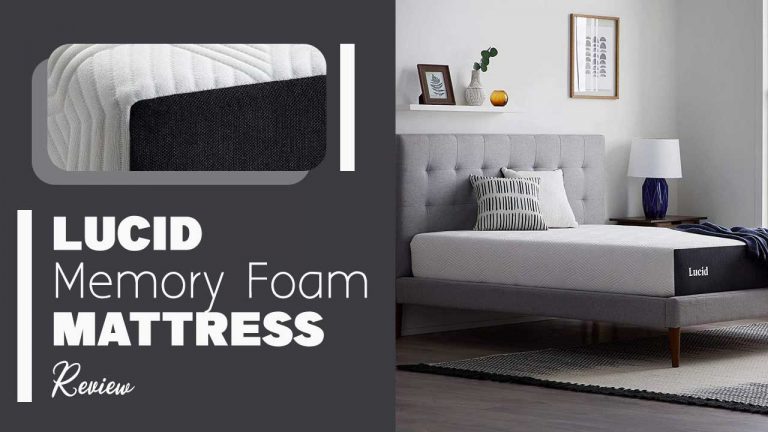
If you are looking for this type of memory foam bed, we recommend the Lucid 12 Inch Hybrid Mattress. It features several delicately crafted layers (including memory foam and steel coils) that offer support and cooling benefits.
2. Thickness
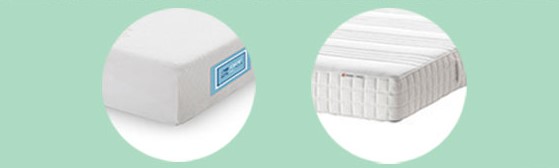
Mattress thickness (sometimes referred to as mattress depth or height) affects how supportive and comfortable it is. If you select a mattress that is too thick or thin, you may suffer from sleep disorders plus other health issues.
The mattress depth plus the materials employed in making it influence how the mattress reacts to pressure. You should select a mattress that is sufficiently supportive to allow you to sleep comfortably at night, and this will largely depend on your weight.
If you are an overweight sleeper, a memory foam mattress with a thickness of between 12 – 14 inches plus a 6-inch comfort layer should work great for you.
The Nectar Queen Mattress has a thickness of 12 inches and delivers an optimal level of firmness, breathability, coolness, and comfort. This is why we have chosen it as the best memory foam mattress for an overweight person.
3. Sleeping position

When selecting a mattress, you must consider your usual sleeping position because it has a huge influence on your mattress.
Side sleepers:
These individuals typically experience strain on their hips and shoulders when sleeping. The reason for this pressure is that the hips and shoulders are the heaviest sections of the body.
Generally, a soft to medium-firm memory foam mattress works best for overweight side sleepers as it cushions all body parts that are in contact with the bed while delivering sufficient support to their joints and spine.
The Zinus 12 Inch Green Tea Memory Foam Mattress is our number one choice for side sleepers.
Back sleepers:
These folks typically do not have a difficult time finding a mattress that suits their sleeping position.
While there are varying preferences for mattresses among overweight back sleepers, what they generally require is a medium-firm mattress like the Lucid 12 Inch Hybrid Mattress.
This type of bed allows sufficient spine contouring even as it delivers the appropriate degree of support and structure.
Stomach sleepers:
Traditional memory foam mattresses may not work well for overweight stomach sleepers because of their extreme softness.
Firm mattresses typically work best for heavy side sleepers because their spines require extra support, thus their hips and shoulders need to be in the same alignment.
If you are an overweight stomach sleeper, you will love the Nectar Queen Mattress as well as the Live & Sleep Ultra Queen Mattress.
Combination sleepers:
If you are a combination sleeper, you need a mattress that will adapt to your movements whilst also delivering dependable comfort and support.
In order words, the best mattress for combination sleepers is one that is bouncy and responsive. Memory foam mattresses typically lack this feature.
If you are an overweight combination sleeper, a bed that features memory foam as its top layer and a better responsive material such as latex, coils, or springs as the base layer will work well for you.
We recommend the Sleep Innovations Marley Cooling Gel Memory Foam Mattress for combination sleepers who switch between all positions.
3. Firmness Level
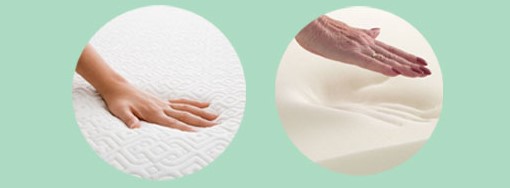
Most memory foam beds are classified as either firm, soft, or medium and every sleeper has varying preferences concerning the firmness level they are looking for.
A mattress that has a medium-firm to extra-firm feel may be more suitable for overweight individuals. This is because such beds deliver the optimal compromise of support and contouring. In contrast, softer beds may leave the individual sinking in too much into the mattress.
Thus, when shopping for the best memory foam mattress for an overweight person, first determine your preferred firmness level and ensure you select a mattress that suits that preference.
This way, you will avoid the hassle of returning a mattress that does not fit your requirements. All the products recommended in the post come with a medium firmness level.
4. Durability

Durability is a critical factor when selecting a memory foam bed. You want one that will last a long time while preserving the comfort level it brings.
This is because quality memory foam beds do not come cheap. Check the warranty given by the manufacturer or seller.
Companies that provide lifetime warranties on their beds are confident that their mattresses are of the highest quality, which is extremely important. Always remember to read the fine print to ensure you are not at any risk.
While all the mattresses recommended in this post are highly durable, the Zinus 12 Inch Green Tea Memory Foam Mattress takes the first position concerning durability.
5. Price

It is vital to consider the price of any mattress you intend to purchase. Memory foam beds are offered in a broad range of prices and quality levels so it is a good idea to establish a budget before you go shopping.
Remember to consider the materials utilized in making the bed. Ask for things like the mattress thickness, the number of coils, the memory foam type, and so forth. Select a high-quality bed that is offered at a reasonable price and within your budget.
Comparison of Top 5 Memory Foam Mattresses for Heavy Couples
| Mattress | Size | Height profiles | Firmness | Color | Weight | Weight limit |
| Nectar Queen Mattress | Queen | 12 inches | Medium | White | 71 pounds | 600 pounds |
| Live & Sleep Ultra Queen Mattress | Queen | 10 inches, 12 inches, 14 inches | Medium | White | 76 pounds | 500 pounds |
| Zinus 12 Inch Green Tea Memory Foam Mattress | Queen | 6 inches, 8 inches, 10 inches, 12 inches | Medium | White | 62.5 pounds | 500 pounds |
| Lucid 12 Inch Hybrid Mattress | King | 10 inches, 12 inches | Medium | White & black | 123 pounds | 500 pounds |
| Sleep Innovations Marley Cooling Gel Memory Foam Mattress | King | 8 inches, 10 inches, 12 inches | Medium | White | 84.4 pounds | 630 pounds |
Final Words:
When shopping for the best memory foam mattress for heavy couples and overweight persons, the most important factors you should consider are the memory foam type used in making the mattress, the thickness and firmness level of the mattress, your sleeping position, as well as the break-in period.
We hope that this post has helped you find the right mattress for you. If you are not able to decide yet, then, you can go with Nectar Queen Mattress which is our choice for the best memory foam mattress for overweight people.